Thursday, May 4, 2023

EMPLOYEE WELL-BEING TO HEALTHY ORGANIZATION

THE TRANSITION FROM EMPLOYEE WELL-BEING TO HEALTHY ORGANIZATION.

In recent years, the concept of employee well-being has gained significant attention in the corporate world. Companies have come to realize that the physical, emotional, and mental health of their employees is vital for the success of their business. However, as we move forward, the focus has shifted from individual employee well-being to creating healthy organizations. It is the responsibility of HR professionals to facilitate this transition.

The term "healthy organization" refers to an environment where employees feel valued, respected, and supported. It is an organization that recognizes the importance of its employees' well-being and takes proactive steps to promote it. The concept goes beyond traditional wellness programs and benefits, such as gym memberships and healthy snacks. It encompasses a range of practices that promote the overall health and wellness of employees (Rizvi, 2023).


The emergence of healthy organizations

The interesting article written by Budiraja, (2022) explain that a healthy organization is built on a people-centrist approach to all aspects of work. It entails shifting the emphasis away from traditional employee benefits and directing it towards a demonstrated commitment to psychological safety and fairness, as well as a culture of employee listening. Healthy organizations tend to cultivate a culture, climate, and practices that promote employee health and safety as well as organizational effectiveness. It becomes imperative for the organization to understand the importance of elevating the environment and culture that promotes and encourages their employees to hold their physical health, social health, as well as mental health on priority. 

The need for Healthy organizations has emerged as a result of these newfound employee expectations. A work culture that values flexibility and puts employee well-being first. To develop a thriving organization and drive long-term growth, there is a need for workplaces that recognizes the significance of putting employees first. With an educational nudge from programs and solutions that help firms move well beyond well-being, these new difficulties can be transformed into possibilities. An aid in providing staff with the appropriate training, allowing the company to embrace productivity, growth, and resilience.  


Video 1: Healthy and well being organization (Litmos heros, 2015)

 Healthy Organization Framework

Figure 1 : Healthy Organization Framework (Dixit, 2023)


Evolution Of Well-being To The Healthy Organization

According to the Bersin (2023) expalin that, We have had hundreds of hours of meetings with CHROs and other HR leaders and they all say the same thing. We need programs and solutions that help everyone in the company be healthy, and they have to go far beyond well being. They want leaders to give people more flexibility. They want employees to feel empowered and well trained. And they want the organization as a whole to embrace productivity, growth, and long-term sustainability.

We call this evolution the shift from Well being as a benefit to a focus on The Healthy Organization. And our research shows how this works.
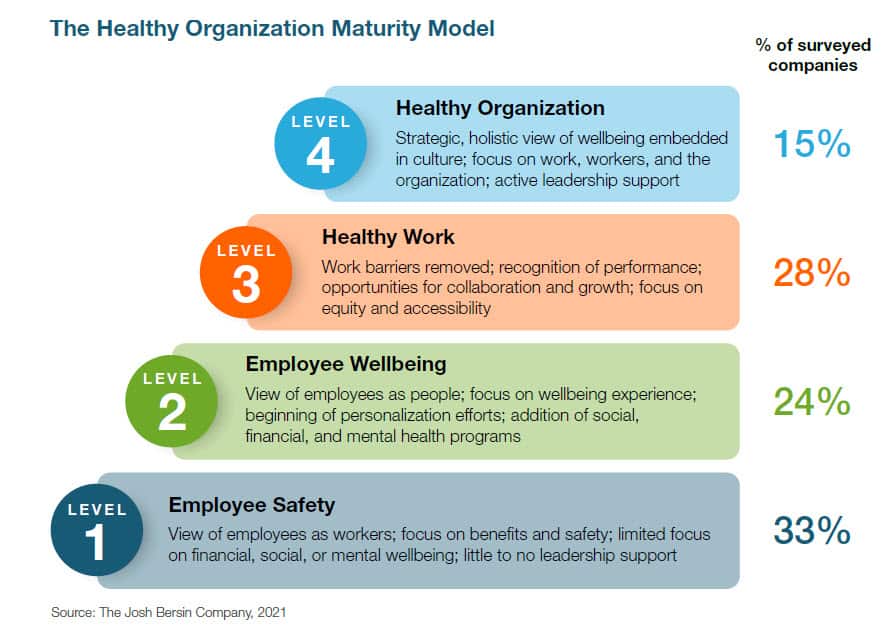
Figure 2 :Healthy organization maturity model  (Bersin, (2023)

 Level 1: Employee Safety

At the bottom level of maturity, companies focus on safety, a program that’s highly strategic in many industries. When I worked in the oil industry, we had to wear Nomex coveralls, hard-hat, and goggles in the refinery. It was a mandatory part of our work. Companies like Dow Chemical, Chevron, Cemex, and many others rank safety as their top priority. And this makes sense.

As Maslow’s hierarchy points out, when people don’t feel safe, nothing else can really happen. So at its core, a Healthy Organization is safe. Today safety has many meanings: physical safety is paramount, but so is psychological safety, safety to be yourself, and safety to take a break, rest, or slow down.

In the pandemic we all needed masks, vaccines, testing, and a safe workplace. But we also need psychological safety to speak up and ask questions, social safety to be quiet or show up late, and leadership safety to feel included, respected, and heard. All these matters, and as you can see, roughly a third of companies heavily focus in this area.

Level 2: Employee Wellbeing

At the next level of investment, companies built Wellbeing programs. And this is where most companies are. Every CHRO and CEO now has a Wellbeing strategy, and in many organizations (JP Morgan Chase, Workday) there are Wellbeing ambassadors, business partners, and specialists around the world.

The Wellbeing “program” is often run out of the benefits department, and it includes dozens or hundreds of programs, benefits, and healthcare offerings. Vendors like Gympass offer a wide range of fitness, mental health, and resilience programs (costing up to $500 per month per employee), and tools like Mequilibrium or Limeade offer resilience check-ins, education, and online assessments. Today nearly every large company has a whole constellation of these programs, and they are expensive, complex, and highly valued.

We’ve developed a whole research report on the offerings, and there are literally thousands of solutions available. Our research shows that they do add great value, but many serve more as recruiting tools than actual work improvement offerings. Nevertheless, this industry has been healthy, and while it may be a bit oversold in some areas, most companies love these programs.

But as the Pandemic wore on, companies told us they needed more. No tools or apps can help meetings be more productive, so we move to level 3: a focus on healthy work.

Level 3: Healthy Work

In our irresistible organization research (The definitive guide to employee experience), we found that “work design” and “management practices” are among the most important parts of health. When people feel they have the right tools, resources, and time, they feel relaxed and productive on the job. And this comes up constantly as we talk with well being managers.

Let me give you an example. Last week I talked with the CHRO of one of the largest healthcare providers in Idaho. They are flooded with COVID cases and have tremendous workload challenges, patient behavior problems, and difficulty hiring people. She told me “we have lots of wellbeing programs, nap rooms, and benefits but people keep saying when will I get time to do this stuff?”

Research Director who led this research, told me that clients keep saying “despite all the benefits and programs we offer, employees keep telling us we don’t think you really care.” And that is the essence of level 3. At this point you have to ask yourself: are we giving people too much to do? Are we working too many hours? Are we really making goals clear? And are we recognizing and rewarding people in a fair and collaborative way?

As you can see from the research, about a quarter of companies focus on this area – and this means 75% do not. I’d suggest if you rethink Wellbeing as part of your organizational health strategy, you’ll bring this into focus.

Level 4: Healthy Organization

At level 4 organizations go beyond. Here companies look at the leadership model, opportunities to grow, and the company’s overall health from top to bottom. A large CPG company, for example, looks at employee retention, mobility, and engagement across all brands, and can tell when one brand is falling behind. These indicators show management that they need to look at many areas of the employee experience, and they annually benchmark themselves against each other.

CONCLUSION

People are the most valuable asset for every organization.Unprecedented global business uncertainty, knowledge‑driven businesses, increasing overheads on employees’ health management, and the war for talent are significant trends that necessitates further exploration and the development of healthy organization approach in today’s scenario. For researchers, studies of this nature offers greater potential for the advancement of knowledge about people experiences at work, for example, how they are treated, what they feel and think about practices are intended to support them, and finally how they behave to those key practices at work. For practitioners, healthy organizational framework provides an action‑oriented approach to examine and understand key factors of organizational performance, which in turn, contribute toward creating and sustaining vibrant and productive workplaces.

REFERENCES

Bersin, J. (2023) Well being and healthy organization. [Online] Available from https://joshbersin.com/just-released-research/healthy-organization-definitive-guide-to-wellbeing-2021/ [Accessed 04 May 2023].

Budiraja, S. (2022) Transition from employee well-being to a healthy organization. [Online] Available from https://www.peoplematters.in/article/employee-engagement/transition-from-employee-well-being-to-a-healthy-organisation-34666 [Accessed 04 May 2023].

Dixit, R. (2023)  HR Trends for 2023: Future of Human Resource Management. [Online] Available from https://www.selecthub.com/hris/hr-trends/ [Accessed 04 May 2023].

Litmos Heros, (2015) Health and Well being in the Workplace. [online video] Available from https://www.youtube.com/watch?v=S7lq8N122Hg [Accessed 04 May 2023].

Rizvi, M.A. (2023) The Transition From Employee Well-being To Healthy Organization by HR. [Online] Available from https://www.linkedin.com/pulse/transition-from-employee-well-being-healthy-hr-rizvi-acca [Accessed 04 May 2023].


HUMAN RESOURCE MANAGEMENT IN NEW ERA

 HRM IN THE NEW MILLENNIUM

Figure 1 : HRM in the new Millennium ( Regent Business School, 2022)

Human Resources have never been more indispensable than today. The competitive forces that we face today will continue to face in the future demanding organizational excellence. In order to achieve this extended quality, organization’s need to focus on learning, quality development, teamwork, and re engineering. These factors are driven by the way organizations implement things and how employees
are treated (studuco, 2023).

Globally the technology is an inevitable tool used for the benefit of humankind. At present it is being adopted by several organizations to meet the needs of its various stakeholders. In the competitive and challenging market that we face today will continue to face in the future demanding organizational excellence. In order to achieve this extended quality, organization’s need to concentrate on adopting, quality development, teamwork, and reengineering. Some of these factors are forced by the way organizations adopt things and how employees are treated (Nagarajan, 2019).


Figure 2 : HRM in the new millennium II (Kumar, 2022)

HR Challenges in new era 

According to Archana, (20060 David Ulrich, a renowned HR expert and author, has identified eight of these issues that are key if the HR function is to add measurable value, deliver business results, enact professionalism, and demonstrate new competencies. Briefly these challenges are:

1. Globalization

HR management needs to create models and processes for attaining global agility, effectiveness, and competitiveness. HR professionals must master global operating skills and the HR function must build global capabilities for the organization such as the ability to move talent, ideas, and information around the world.


2. Managing the Value Chain for Business Competitiveness

HR needs to refocus practices more on the value chain and less on activities within the firm. This is important because by shifting the focus from firm to value chain, all HR activities become defined according to customer criteria.


3. Profitability Through Cost and Growth

Revenue growth is a key component of the profitability equation. The main paths to growth include through leveraging customers, leveraging core competencies and mergers, acquisitions or joint ventures. Each of these has HR implications and requires co-operation between management and HR professionals to design and deliver new organizational practices.


4. Capability Focus

Managers and HR professionals should constantly seek the capabilities necessary for success. Whilst general management must identify and foster what capabilities they need to increase organizational competitiveness, HR professionals must frame what they do in terms of these capabilities at an organizational level.


5. Organizational Change

HR professionals need to help their organization to change, define an organizational change model, disseminate that model throughout the organization and sponsor its on-going application.


6. Technology

Managers and HR professionals need to be able to redefine work to maximize the value of technology in the organization. This means making technology a viable and productive part of the work setting, and requires that HR professionals keep ahead on the information curve.


7. Attracting and Retaining Intellectual Capital

Business organizations of the future will compete aggressively for the best people, and the successful organization will be the ones that are able to attract good people, use them effectively, develop them and retain their skills within the organization.


8. Transforming the Organization

Over the past decade, organization have gone through one change initiative after another including downsizing, consolidations and restructurings. Unlike many of these turnaround efforts, transformation goes to the heart of the organization changing the fundamental image of the business, as seen by customers and employers. HR has to play a leading role in organization transformation.


Conclusion 

In the technological era is a force that changes and improves the lives of people living in all over the world. Digitalization downsized the Country borders and also changes it from barriers to bridges as a result of trade globalization and liberalization, improving the levels of education among people and workers in globally, and progression in technology. With the use of technology which gives the flow of Goods, services and labour talent are now flowing more freely throughout the globe than comparing the yesteryears. There are abundant of opportunities and the organizations to increased employment opportunities and increased wages for skilled workers. The challenges are equally abundant. Companies need to meet up with millennia’s and changing workforce; they must grab the attention, and to deal with the multicultural employment pools. Last and foremost; they should conduct relevant research towards the human resource and their indispensible contribution in future organizations.


REFERENCES


 Archana, (2006) HR Challenges in new ERA - The approach of the millennium has brought about new challenges. [Online] Available from https://www.citehr.com/14716-hr-challenges-new-era-approach-millennium-has.html [Accessed 04 May 2023].

Kumar, A. (2022) HRM in new millennium. [Blog entry] 14 July. Available from https://getuplearn.com/blog/hrm-in-the-new-millennium/ [Accessed 04 May 2023].

Nagarajan, (2019) Novel HRM practices in the new millennium. Jettir, 6 (4) 1-2. Available from https://www.jetir.org/papers/JETIRAY06010.pdf [Accessed 04 May 2023].

Regent Business School, (2022) A 21st century approach to Human Resource Management. [Blog Entry] 29 November. Available from https://regent.ac.za/blog/a-21st-century-approach-to-human-resource-management [Accessed 04 May 2023].

Studuco, (2023). HRM in the new millennium. [Online] Available from https://www.studocu.com/in/document/christ-deemed-to-be-university/human-resource-management/human-resource-management-in-the-new-millennium/26082257 [Accessed 04 May 2023].


HUMAN RESOURCE EMPLOYEE RELATION

 HOW TO BUILT STRONG RELATION WITH YOUR TEAM

Employee relations is a hot-topic buzzword in business circles these days, and for good reason: the relationship between an employer and its employees is an integral part to the longevity of any successful company or organization. But for something so critical to business operations, the details can be irritatingly vague and general (Crail, 2023).

Employee relations are basically about the pay–work bargain – the agreement made between employers and employees whereby the former undertakes to pay for the work done by the latter. Fundamentally, many employers simply want employees who will do what they are told without costing too much. They want engagement and commitment. In contrast, employees want a say in how much they are rewarded, their terms and conditions of employment and the way in which their work is organized. They want good working conditions, security of employment, a healthy and safe working environment and the scope to raise and resolve grievances .


 Figure 01 : Employee relation (Martic, 2023)

According to the HR Acuity (2022), Employee relationship management usually entails:

  • Workplace issue management: This involves case management of workplace conflict mediation and arbitration. Employee relations managers work to resolve altercations between team members. 

  • Employee relations policy development: An employee relations manager is responsible for designing, executing and tracking policies and programs relating to remuneration and benefits, workplace safety, office hours, fair working practices and other HR facets. 

  • Liaison between employees and managers: It’s largely the responsibility of employee relations staff to act as intermediaries between workers and their superiors, especially regarding conflict or miscommunication.


7 Strategies for Improved Employee Relations

As per the Work force hub, (2022) Following are the seven strategies for improved employee relations.

1. Promote an Open Dialogue

Open communication helps to prevent employee confusion and unnecessary stress. It can decrease friction between employees and their co-workers, especially management and employees. It helps to set clear goals and expectations. When millions of employees were abruptly sent home to work in March 2020 (due to the pandemic), effective communication became one of the biggest challenges for managers and the HR department.

2. Focus on Company Mission and Values

Express your company values and mission frequently. More importantly, make sure leadership and management walk the walk. Few businesses have as a mission ‘make more money no matter what.’ Instead, successful businesses have a reason for why they do what they do. Your company fills a need that was unfilled before. You have hopes and aspirations for how you will help more people. You have goals and dreams for your business. Share them.

3. Increase the Ratio of Positive vs. Negative Feedback

Employee relations experts recommend the following to help employees feel valued:

  • Say thank you for big and small things. It can range from a simple thank you card to verbal appreciation.
  • Tell employees they are valuable. They need to hear it. Letting them know when they handled a situation or a customer well helps motivate them to do it again.
  • Recognize high achievers. Public recognition is a huge motivator for certain personalities. Plus, it has the added benefit of showing that your company values and goals are important!

4. Inspire and Reward

Another way to inspire a new employee or existing employees is to reward them. Consider having a gold, silver, bronze incentive for various achievements. But, make sure that these incentives align with your business values. Otherwise, you may end up in a similar situation with Wells Fargo, where corporate goals conflicted with corporate values and incentives won out.

5. Offer Career Development

Even lower-level employees can benefit from development. Most employees are happier when they have a goal or a dream to work toward. Map the career path for each job role at your company. Consider the skills and unused talents your employees have.

6. Promote Healthy Work-Life Balance

Unfortunately, some employers forget that employees have personal lives that take priority.

But, it’s not all about the benefits. The attitude of your managers, when faced with employees’ personal dilemmas, will make a difference. Although employees often value the chance to work from home, this doesn’t mean you should ask them to take work home. Instead, work from home should mean work done during a normal work day.

7. Use Software to Eliminate Redundancy and Reduce Mistakes

Implementing systems and software can make a big difference. That’s because it helps to automate and improve communications. Project management applications make it easy for managers and team members to see what’s required on a project and who’s responsible. Messaging apps can make communication instant and avoid the stress from unplanned lengthy discussions that often occur face-to-face.


Video 1: Employee relation (Greggue, 2015)
 

Conclusion

Employee relations are important because they form the foundation of trust between an organization and its employees. When workers feel respected by their supervisors for their contributions to the organization's success, they tend to reciprocate this respect with hard work and loyalty towards the company. An increase in output and performance It's simple, the happier your employees are the more likely they are to work harder. An increase in employee engagement: Having better communication will lead to your employees feeling valued, involved, and connected.


REFERENCES
 
Crail, C. (2023) What is employee relation. [Online] Available from https://www.forbes.com/advisor/business/what-is-employee-relations/ [Accessed 04 May 2023].
 
Greggu, (2015) What is Employee relation, [Online Vedio] Available from https://youtu.be/5_btNIdvEfo [Accessed 04 May 2023].
 
HR Acuity, (2022) Current trends in HR employee Relation. [Blog Entry] 14 September. Available from https://www.hracuity.com/blog/hr-employee-relations/ [ Accessed 04 May 2023].
 
Martic, K. (2023) What are the employee relations and why they are important. [Blog Entry] 10 January. Available from https://haiilo.com/blog/what-are-employee-relations-and-why-are-they-important/ [Accessed 04 May 2023].
 
Workfource hub, (2022) Improve employee relation with seven strategies (onsite and remote). [Blog Entry]  02 August. Available from https://www.workforcehub.com/blog/7-strategies-to-improve-employee-relations-for-a-phenomenal-workplace/ [Accessed 04 May 2023].


Wednesday, May 3, 2023

EMPLOYEE REWARD AND RECOGNITION

 GLOBAL TRENDS IN EMPLOYEE REWARD AND RECOGNITION

Figure 1 : Employee reward and recognition (Syed, 2022)

 Employees’ contribution to any organization is the key to success. For this purpose, establishing a balance between contributions of employees to the organization and the organization’s contribution to the employee is must. This is one of the reasons that organizations in the present day have realized the importance of reward and recognition for the employees in order to enhance their contribution in the organizations.
(Zeb et al, 2021)


Rewards and recognition are important tools that can be used to motivate employees and improve their performance. Rewards can include things such as bonuses, raises, or special privileges, while recognition can come in the form of words of appreciation or awards.

When used effectively, rewards and recognition can help to create a positive work environment and increase employee satisfaction. They can also help to boost morale and encourage employees to work harder and achieve better results (Quit Genius, 2023)


Applying Maslow's Hierachy of needs to the Work Place

When Abraham Maslow created his Hierarchy of Needs, he argued that humans are motivated by five essential needs: physiological, safety, social, self-esteem and self-actualization (also known as self-fulfillment).

At the bottom of the pyramid are our physiological needs, such as food, water, sleep, and warmth. Safety concerns come next, and these include comfort, security, and stability. Moving up the pyramid, we come to social needs, such as a sense of belonging and friendship, and esteem needs, such as a positive self-image, prestige and status, before topping out with self-actualization, which is about feeling fulfilled through growth, advancement and creativity (Sodexo Engage, 2023)


Figure 2 : Maslow's Hierarchy of Human needs the expanded hierarchy model (Teach thought staff, 2022)

What are the latest trends in reward and recognition

As per Hulme (2022) State that

1. Access to health and well being support

Unum’s research found that financial worries are affecting both physical and mental health, with 40% of employees saying they have low energy, 32% are unable to sleep and 25% are so worried about their finances they’re feeling depressed.

Help employees build financial resilience through a specialist financial education platform and signpost them to relevant employee assistance programme resources and shopping discount perks.

2. Hybrid working

Covid-19 accelerated trends of working from home and hybrid working, which is set to continue in 2023. While companies can’t stop employees from looking for new opportunities, research from Glassdoor indicates that employers who offer their staff a good hybrid working experiance are likely to have less turnover. But there is no single solution.

The key to successful hybrid working is creating a workplace community and culture that supports employees professionally and personally so they can achieve a healthy work/life balance.

3. Inclusive benefits and inter generational reward

With people living and working longer than ever, the multi generational workforce looks set to keep growing. Here we see pressures are stacking up on the so-called ‘sandwich generation’, who are caring for elderly parents and dependent children.

Employers should invest time in understanding and identifying which benefits are most appealing to each cohort within their workforce and create a comprehensive diversity, equity and exclusivity policy to answer those unique needs.

4. ESG rewards

Environmental, Social and Governance (ESG) has rocketed up employers’ agendas in recent years. Ensuring a joined-up approach to engage employees in your ESG commitments will be the key to success in 2023, both in helping establish a socially responsible business and for attracting and retaining staff who are fully invested in your corporate values.

Deloitte’s 2020 Global Marketing Trends Report shows that purpose-driven companies are 40% more likely to retain talent than their competitors. Offering variety and flexibility in your activities will allow employees to choose the type of activities that resonate with them and create a lasting impact in society.

And including ESG options in employee benefit packages, such as introducing an electric vehicle or cycle to work scheme, will in turn help staff to reach the office in an environmentally friendly manner.

What are the technology involve in rewards & recognition?

One way of increasing job satisfaction through an R&R program is through instant peer recognition, which allows employees to thank or compliment their colleagues for a job well done, perhaps through a company intranet system or social tools that allow them to show instant appreciation. A more structured rewards and recognition module could be the way forward for some workplaces, focusing on easy-to-measure metrics, such as reaching internal milestones or KPIs, which can then be monitored by the HR business person, with the data being used to learn more about what is working for the business (Darwinbox, 2023).

How to implement a Reward and Recognition System

                Video 1: How do i  build a employee recognition programme (Bonusly, 2021).


References

Bnusly, (2021) How do i  build a employee recognition programme. [Online Video0 Available from https://www.youtube.com/watch?v=bRM19CxIDek [Accessed 03 May 2023].

Drwinbox, (2023) Rewards and recognition. (Online) Available from https://explore.darwinbox.com/hr-glossary/rewards-and-recognition [Accessed 03 May 2023].
 
Hulme, J. (2022) Four trends in reward and benefits strategies for 2023. [Online] Available from https://reba.global/resource/four-trends-in-reward-and-benefits-strategies-for-2023.html# [Accessed 03 May 2023].

Quit Genious, (2023) Reward and Recognition [Online] Available from https://www.quitgenius.com/hr-glossary/rewards-and-recognition [Accessed 03 May 2023].
 
Sodexo Engage , (2023) Applying Maslow's Hierarchy of Needs Theory to HR Responsiblities. [Blog entry] Availalhttps://www.sodexoengage.com/blog/rewards-recognition/applying-maslows-hierarchy-of-needs-theory-to-hr-responsibilities
 
Syed, N. (2022) Resilience, remote work and reward: HR issues for 2022. [Online] Available from https://www.hcamag.com/asia/specialisation/reward-recognition/resilience-remote-work-and-rewards-hr-issues-for-2022/320695 [Accessed 03 May 2023].

Teach Thought staff, (2022) What is maslow's hierarchy of needs. (online) Available from https://www.teachthought.com/learning/what-is-maslows-hierarchy-of-needs/ [Accesseed 03 May 2023].

Zeb, A. Rehman, S. U. Saeed, G and Ullah, H. (2021) A study of the relationship between reward and recognition and employee job satisfaction: a literature review. Abasyn Jounal of social science 7 (2) 278. Available from https://www.researchgat e.net/profile/Hamid-Ullah-3/publication/326356368_A_Study_of_the_Relationship_between_Reward_and_Recognition_and_employees_Job_Satisfaction_A_Literature_Review/links/5b478997a6fdccadaec40388/A-Study-of-the-Relationship-between-Reward-and-Recognition-and-employees-Job-Satisfaction-A-Literature-Review.pdf [ Accessed 03 May 2023].


EMPLOYEE WELL-BEING TO HEALTHY ORGANIZATION

THE TRANSITION FROM EMPLOYEE WELL-BEING TO HEALTHY ORGANIZATION. In recent years, the concept of employee well-being has gained significant...